

How to Buy the Best Quality T-Shirt Online: The Complete 2026 Guide
Posted by Heavyweight Collections, Inc. on Feb 25th 2026
By Jay Durkee, Founder of Heavyweight Collections
If you've ever bought a t-shirt online only to have it fall apart after a few washes, you're not alone. The harsh truth is that 95% of t-shirts sold online are designed to be replaced within 12 months—not because you want to, but because they wear out, shrink dramatically, or fade beyond recognition.
But it doesn't have to be this way. The difference between a $12 t-shirt that lasts one year and a $30 t-shirt that lasts ten years comes down to seven specific quality markers that most online shoppers never know to look for. This guide will teach you exactly what separates disposable fast fashion from investment-quality t-shirts, and more importantly, how to identify quality when you can't touch the fabric in person.
By the end of this guide, you'll know more about t-shirt quality than 99% of online shoppers—and you'll never waste money on cheap shirts again.

The 7 Quality Markers Every Online Buyer Must Know
When shopping for t-shirts online, you can't feel the fabric or inspect the stitching. But manufacturers reveal quality through specific details in product descriptions and photos. Here are the seven markers that separate exceptional t-shirts from mediocre ones:
1. Fabric Weight: The Single Most Important Quality Indicator
Fabric weight, measured in ounces per square yard (oz/yd²) or grams per square meter (GSM), is the number one predictor of t-shirt durability and quality. Unfortunately, most online retailers deliberately avoid mentioning it.
| Weight Category | Fabric Weight | Expected Lifespan | Typical Use | Price Range |
|---|---|---|---|---|
| Lightweight | 3.0 - 4.5 oz | 6-12 months | Promotional tees, disposable fashion | $8-15 |
| Medium Weight | 4.6 - 5.5 oz | 1-2 years | Standard retail, everyday basics | $15-25 |
| Heavyweight | 5.6 - 7.0 oz | 3-5 years | Premium t-shirts, workwear | $25-35 |
| Super Heavyweight | 7.1 - 8.0+ oz | 7-10+ years | Investment pieces, heritage brands | $30-50 |
What to look for online:
- Product specs listing "6.1 oz" or "200 GSM" or similar
- Descriptions mentioning "heavyweight" with actual numbers
- Comparison to industry standards (e.g., "heavier than standard retail")
Red flag: No fabric weight listed anywhere in the product description or specifications. This almost always means lightweight fabric (under 5 oz) that the seller doesn't want you to know about.
Why it matters: A 7.5 oz t-shirt contains 67% more fabric than a standard 4.5 oz retail tee. That extra material translates directly into durability—heavyweight t-shirts can last 5-7 times longer than lightweight alternatives. For a detailed breakdown of fabric weights and what they mean, see our complete guide: What Weight is Heavyweight T-Shirt?
2. Manufacturing Location: Where Your T-Shirt Was Made Matters
The country of manufacture directly impacts quality control, labor practices, and environmental standards. While "Made in USA" isn't automatically better in every product category, for t-shirts it consistently correlates with higher quality and longer lifespan.
| Factor | USA-Made | Imported (Asia/Central America) |
|---|---|---|
| Labor Cost | $18-25/hour | $2-5/hour |
| Quality Control | Higher standards, easier oversight | Variable, harder to monitor |
| Environmental Regulations | EPA standards, regulated dyeing | Varies by country |
| Stitching Quality | 15-17 stitches per inch typical | 10-12 stitches per inch typical |
| Fabric Sourcing | Often domestic cotton | Mixed sources |
| Carbon Footprint | ~80% lower (no overseas shipping) | Higher due to long-distance transport |
What to look for online:
- Clear statement: "Made in USA," "Manufactured in Los Angeles," "Sewn in North Carolina"
- Brand story explaining their manufacturing location and why it matters
- Photos of the factory or production process
- Tag photos showing country of origin
Red flags:
- "Designed in USA" (but manufactured elsewhere)
- "Made with imported materials" (vague, could mean anything)
- No mention of manufacturing location anywhere
- "Global sourcing" without specifics
For a deep dive into why USA-made t-shirts deliver better value despite higher upfront cost, read: Premium USA Made T-Shirts for Men: Why Manufacturing Location Matters
3. Cotton Quality: Not All 100% Cotton Is Equal
The type of cotton and how it's spun dramatically affects softness, durability, and how the shirt ages over time.
Cotton spinning methods:
- Ring-spun cotton: Fibers are continuously twisted, creating a softer, finer yarn. Often used in lightweight to medium-weight shirts. Very soft but can be delicate.
- Combed cotton: Short fibers are removed before spinning, resulting in smoother fabric.
- Ring-spun and combed: The combination of both processes—smooth and refined.
- Open-end cotton: A different spinning method that produces thicker, more substantial yarn. When used in heavyweight construction (like 16-singles), creates extremely durable fabric that develops beautiful vintage character over time. This is the traditional method for workwear and heritage t-shirts built to last decades.
Understanding yarn count: The "singles" measurement indicates yarn thickness—lower numbers mean thicker yarn. For example, 16-singles yarn is thicker and more substantial than 30-singles. In heavyweight t-shirts, thicker yarn (16-18 singles) combined with tight knitting creates the durable, long-lasting fabric that develops a vintage patina with age.
Organic vs. conventional cotton:
- Organic: Grown without pesticides, better for environment, often softer. Typically 20-30% more expensive.
- Conventional: Standard agricultural practices. Quality can still be excellent with proper processing.
Cotton vs. poly-blends:
- 100% cotton: Breathes better (40% more airflow), ages beautifully, develops natural patina. The best heavyweight t-shirts use 100% cotton in thicker yarn counts (like 16-singles open-end) for maximum durability and vintage character development.
- 50/50 cotton-poly: Resists wrinkles, holds color longer, but doesn't breathe as well. Can feel synthetic.
- Tri-blends (cotton/poly/rayon): Soft and drapey but less durable over time. Pills more easily.
What to look for online:
- "100% cotton" with yarn specifications (e.g., "16-singles" or "18-singles")
- "Ring-spun cotton" (softer, lighter weight shirts)
- "Open-end cotton" with heavyweight construction (durable, heritage quality)
- Specific percentage breakdowns for blends
Red flag: Just "100% cotton" with no mention of yarn type, spinning method, or weight. This usually means the cheapest lightweight construction.
4. Construction Details: How the Shirt Is Built
A t-shirt is only as strong as its weakest seam. Even heavyweight fabric will fail if construction is poor.
Key construction elements to verify:
Stitching:
- Double-needle stitching: Two parallel rows of stitching at seams (shoulders, sleeves, hem). 2-3x more durable than single-stitch.
- Stitch density: Quality shirts have 15-17 stitches per inch. Budget shirts: 10-12 stitches per inch.
- Reinforced stress points: Extra stitching at armpits and shoulder seams where tears typically start.
Collar construction:
- Ribbed collar: Stretches and returns to shape without sagging.
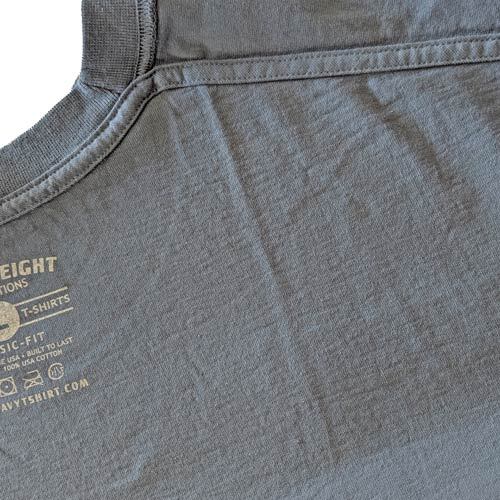
- Taped neck seam: Fabric tape covering the shoulder seam inside the collar prevents stretching.
- Double-stitched collar: Maintains shape through hundreds of washes.
Shoulder construction:
- Shoulder-to-shoulder tape: Fabric tape across shoulders inside shirt adds durability and prevents stretching.
- Set-in sleeves: Sleeves sewn into armhole (not just overlapped) for better fit and durability.
Hem:
- Double-needle hem: Bottom edge has two parallel stitch lines. Won't unravel if one thread breaks.
- Side-seamed construction: Shirt constructed with side seams (not tubular). Maintains shape better and allows for better fit.
What to look for online:
- Product descriptions mentioning "double-needle stitching," "reinforced shoulders," "taped neck"
- Close-up photos showing stitch detail and collar construction
- Zoom function allowing you to inspect seam quality in photos
Red flag: Only model photos with no detail shots. No mention of construction specifics in the description.
5. Dyeing Method: How Color Is Applied
The dyeing method determines how well your t-shirt holds color over years of washing. Most online retailers use the cheapest method and hope you don't notice the difference.
Three main dyeing methods:
- Garment-dyed: The shirt is fully constructed first, then dyed as a complete garment. This causes the fabric to compact and pre-shrink, resulting in better color retention (85-90% after 100 washes) and minimal future shrinkage (under 1%). More expensive but superior quality. Learn more about garment dyeing here.
- Piece-dyed: Fabric is dyed before cutting and sewing. Good color saturation, moderate retention. Expected shrinkage: 3-5%.
- Yarn-dyed: Individual yarn strands are dyed before weaving. Most expensive, excellent color retention, used primarily for stripes and patterns.
What to look for online:
- "Garment-dyed" or "garment-washed" in the description
- "Pigment-dyed for vintage look" (intentionally faded aesthetic)
- Information about color retention in wash instructions
Red flag: No mention of dyeing method at all, or vague terms like "vibrant colors" without explaining the process.
6. Pre-Shrinking: Will Your Shirt Fit After the First Wash?
Nothing is more frustrating than buying a perfectly-fitting t-shirt online, washing it once, and having it shrink two sizes. Pre-shrinking prevents this disaster.
Pre-shrinking methods:
- Garment-washed: Complete shirt is washed after construction. Shrinkage already happened before you buy it. Future shrinkage: Less than 1%.
- Compacted/Sanforized: Fabric mechanically compressed before cutting. Reduces shrinkage to 2-3%.
- No pre-treatment: Budget shirts skip this step. Can shrink 5-10% on first wash—a size Large becomes a Medium.
What to look for online:
- "Pre-shrunk" or "garment-washed" in product description
- "Minimal shrinkage" with a percentage (e.g., "less than 2%")
- Washing instructions mentioning the shirt is already washed
- Customer reviews confirming "same exact size after washing"
Red flag: No mention of shrinkage or pre-treatment. Customer reviews saying "shrunk significantly" or "size down."
7. Brand Transparency: Does the Company Tell You How It's Made?
Brands confident in their quality are transparent about their manufacturing process. Brands hiding details usually have something to hide.
Signs of a transparent, quality-focused brand:
- Detailed "About Us" or "Our Process" page explaining manufacturing
- Photos or videos of the factory or production process
- Specific fabric weight, construction, and sourcing details for each product
- Clear return policy (30+ days suggests confidence in product)
- Responsive customer service that can answer technical questions
- Media features or third-party validation (press coverage, awards, certifications)
Example of brand transparency: Heavyweight Collections, featured in Fox Business and named Best Oversized Black T-Shirt by New York Magazine, openly shares their southern California manufacturing process, provides exact fabric specifications (7.5 oz garment-dyed heavyweight cotton), and details their garment-dyeing methodology.
Red flags indicating lack of transparency:
- Generic stock photos only (no actual product photos)
- No company history or manufacturing information
- Vague descriptions like "premium quality" without specifics
- No return policy or very short return window (7 days or less)
- Cannot contact customer service for product details
- Contradictory information (says USA-made but ships from China)
Red Flags: What to Avoid When Buying T-Shirts Online
Sometimes knowing what NOT to buy is just as important as knowing what to buy. Here are the warning signs that should make you close the browser tab:
| Red Flag | What It Means | Why It Matters |
|---|---|---|
| No fabric weight listed | Likely lightweight (3-4 oz) or inconsistent quality | Will wear out in 6-12 months |
| "Made with imported materials" | Vague sourcing, could be from anywhere | Quality unknown, difficult to verify claims |
| No return policy or <14 days | Brand has low confidence in product quality | Stuck with poor-fitting or low-quality shirt |
| Only model photos, no product detail shots | Hiding fabric texture, construction, or tags | Cannot assess actual quality before buying |
| Prices "too good to be true" (<$15 for "premium") | Cutting corners on materials or labor | False economy—will replace within a year |
| Multi-pack "deals" only (3 for $20, etc.) | Disposable quality designed for frequent replacement | Buying quantity over quality |
| Hundreds of 5-star reviews posted same day | Fake reviews or incentivized reviews | Cannot trust quality claims |
| No sizing chart or only S/M/L/XL generic | One-size-fits-all manufacturing, mass production | Poor fit, inconsistent sizing between colors |
| Description focuses only on "soft" or "comfortable" | No substance—avoiding technical details | Usually means thin, cheap fabric |
| Instagram-only brand with no real website | Dropshipping, no quality control | Difficult to return, no accountability |
How to Evaluate T-Shirts Online: A Step-by-Step Process
You've learned the quality markers and red flags. Now here's exactly how to evaluate any t-shirt you find online before clicking "Add to Cart."
Step 1: Read the Product Description Thoroughly
Use this checklist:
- ☐ Fabric weight listed (in oz or GSM)
- ☐ 100% cotton or blend percentage specified
- ☐ Manufacturing location clearly stated
- ☐ Construction details mentioned (double-stitch, reinforced, taped neck)
- ☐ Pre-shrunk or garment-washed indicated
- ☐ Dyeing method described
- ☐ Care instructions provided
Example of a GOOD product description:
"7.5 oz heavyweight 100% cotton knit from 16-singles open-end yarn, garment-dyed and pre-washed in our southern California facilities. Double-needle stitching throughout with reinforced shoulder seams and taped neck for durability. Side-seamed construction with ribbed collar. Minimal shrinkage (less than 1%) due to garment-wash process. Made in USA."
Example of a BAD product description:
"Premium soft cotton tee with comfortable fit. Perfect for everyday wear. Looks great with jeans or shorts. Available in multiple colors. Machine washable."
The bad description tells you nothing about quality. It's all marketing fluff with zero technical information.
Step 2: Check Technical Specifications
Many online retailers bury important details in a "Specifications" or "Product Details" tab. Always check there for:
- Weight: Look for 5.5+ oz for quality (6.5-7.5 oz for premium)
- Material composition: 100% cotton preferred, or specific blend percentages
- Care instructions: If it says "dry clean only," it's not a durable everyday tee
- Country of origin: Where it was made
- Certifications: Fair Trade, Made in USA labels
Step 3: Analyze Customer Reviews Intelligently
Don't just look at the star rating—read what customers actually say about durability and fit.
Green flags in reviews:
- "Still wearing this 2+ years later and it looks great"
- "Washed 50+ times, no fading or holes"
- "Same size even after washing"
- "Thick, quality fabric—you can feel the difference"
- "Worth the price, will buy more"
Red flags in reviews:
- "Thin material, can see through it"
- "Shrunk two sizes after first wash"
- "Fell apart after three washes"
- "Collar stretched out immediately"
- "Not worth the money, buy cheap instead"
- "Runs small/large" (indicates inconsistent sizing)
Review authenticity check:
- Look for verified purchase badges
- Check review dates (hundreds posted same day = suspicious)
- Read negative reviews carefully (often most honest)
- Look for photo reviews showing actual product
Step 4: Compare Sizing Charts
Quality brands provide detailed measurements, not just generic S/M/L/XL.
What a good sizing chart includes:
- Chest width (measured armpit to armpit, laying flat)
- Body length (measured from high point of shoulder to hem)
- Sleeve length (from shoulder seam to cuff)
- Shoulder width (seam to seam across back)
- Multiple fit options clearly differentiated (Classic, Slim, Athletic, Oversized)
How to use the sizing chart:
- Take your best-fitting t-shirt
- Lay it flat on a table
- Measure chest (armpit to armpit), length (shoulder to hem), and sleeve
- Compare YOUR measurements to the size chart
- Order based on measurements, not your usual size
Important: Heavyweight shirts (6+ oz) often fit differently than lightweight shirts. They're typically more generous in cut because the heavier fabric doesn't cling to the body. Read the fit notes carefully.
Step 5: Examine Photos Closely
Product photos reveal quality if you know what to look for.
Use the zoom function to check:
- Fabric texture: Can you see the weave? Tight weave = higher quality. Loose, see-through weave = thin fabric.
- Seam detail: Look for double-needle stitching at hems and shoulders.
- Collar construction: Ribbed collar should look substantial, not flimsy.
- Tag/label: Many brands show the tag with fabric content and care instructions.
- Thickness visible in photos: Quality brands often photograph the shirt folded to show fabric thickness.
Test for thin fabric in photos:
If you can see the model's skin tone or undershirt clearly through a white or light-colored tee in the product photo, the fabric is too thin (under 5 oz). Quality white t-shirts should be opaque in photos.
Look for:
- Close-up texture shots
- Detail photos of stitching, collar, tags
- Multiple angles (front, back, side, inside)
- Actual product photos, not just models wearing it
Price vs. Value: The True Cost of T-Shirts
The cheapest t-shirt is rarely the best value. Here's why investing in quality actually saves you money over time.
The $12 T-Shirt vs. $30 T-Shirt: A 5-Year Analysis
Scenario A: Budget Lightweight T-Shirt ($12 each, 4.0 oz)
- Initial cost: $12
- Average lifespan: 9-12 months with weekly wear
- Replacements needed over 5 years: 5-6 shirts
- Total cost over 5 years: $60-72
- Cost per wear (52 wears/year × 0.83 years): $0.28
- Environmental impact: 5-6 shirts in landfill
- Typical issues: Holes at armpits by month 8, collar stretched, significant fading, shrinkage after washing
Scenario B: Premium Heavyweight T-Shirt ($30 each, 7.5 oz)
- Initial cost: $30
- Average lifespan: 7-10 years with weekly wear
- Replacements needed over 5 years: 0 (same shirt still going strong)
- Total cost over 5 years: $30
- Cost per wear (52 wears/year × 7 years): $0.08
- Environmental impact: 0 shirts in landfill during 5-year period
- Typical performance: Minimal fading, no holes, collar maintains shape, develops vintage character
The verdict: The $30 heavyweight t-shirt costs 50% less per wear than the $12 budget shirt, despite being 2.5x more expensive upfront. Over 5 years, you save $30-42 AND avoid the hassle of constantly replacing worn-out shirts.
Understanding Price Tiers
| Price Tier | Typical Specs | Expected Lifespan | Best For |
|---|---|---|---|
| Budget ($10-15) | 3.5-4.5 oz, imported, basic construction | 6-12 months | One-time events, promotional use, undershirts |
| Mid-Range ($18-25) | 4.5-5.5 oz, mixed sourcing, decent construction | 1-2 years | Everyday basics with planned replacement cycle |
| Premium ($28-40) | 5.5-7.5 oz, USA-made or high-quality manufacturing, superior construction | 5-10 years | Long-term wardrobe investment, "buy once" approach |
| Luxury ($50+) | Often similar specs to $30-40 premium, paying for brand name | 5-10 years (similar to premium tier) | When you specifically want the designer label |
Important note on luxury tier: Brands like James Perse, John Elliott, and designer labels often charge $60-120 for t-shirts with similar or even lighter fabric weight than premium brands at $30-40. You're paying for the brand cachet, not necessarily better quality. If longevity and value matter more than the label, premium tier delivers better bang for your buck.
Where to Buy Quality T-Shirts Online
Now that you know what to look for, here are recommended retailers organized by what they do best. Note: This is educational guidance based on quality markers, not paid endorsements.
Best for Heavyweight Quality & Durability
Heavyweight Collections
- Specialty: 7.5 oz super heavyweight, USA-made, garment-dyed
- Featured in: Fox Business, New York Magazine Strategist (Best Oversized Black T-Shirt)
- Fit options: Classic Fit, Pro Fit, Tall Fit
- Price range: $28-32
- Why it's quality: Transparent manufacturing (southern CA), specific fabric weight listed, detailed construction info, 30-day returns
- Shop: HeavyTshirt.com
The Classic T-Shirt Co.
- Specialty: Organic cotton, GOTS certified, ethical manufacturing
- Fabric weight: ~6 oz
- Price range: $32-38
- Why it's quality: Transparent supply chain, certifications, sustainable focus
Best for Budget-Conscious Quality
Kirkland (Costco)
- Fabric weight: ~5.5-6 oz
- Price: $4-5 per shirt in multi-packs
- Why it works: Surprisingly good quality for the price, but less durability than premium options
- Trade-off: Limited colors, basic construction, 2-3 year lifespan vs. 7-10 for premium
Best for Variety & Modern Fits
Asket
- Specialty: Transparent pricing, lifetime guarantee, detailed product info
- Fabric weight: 5-6 oz depending on style
- Why it's quality: Shows exact cost breakdown, ethical manufacturing, extensive size range
Where to Avoid
- Generic Amazon sellers with no established brand (quality inconsistent, difficult returns)
- Instagram-only "brands" with no real website or return policy (often dropshipping)
- Sites using only stock photos (you're not seeing the actual product)
- Multi-level marketing t-shirt brands (paying for the business model, not quality)
Sizing Guide: How to Get the Perfect Fit When Buying Online
Even the highest-quality t-shirt is worthless if it doesn't fit. Here's how to ensure a perfect fit when you can't try it on first.
How to Measure for Perfect Fit
What you'll need:
- Your best-fitting t-shirt (one you love the fit of)
- Fabric measuring tape (or string and a ruler)
- Flat surface (table or floor)
Measurements to take:
- Chest width: Lay shirt flat. Measure straight across from armpit to armpit. Double this number for full chest circumference.
- Body length: Measure from the high point of shoulder (where collar attaches) straight down to bottom hem.
- Sleeve length: Measure from shoulder seam to end of sleeve cuff.
- Shoulder width: Measure from shoulder seam to shoulder seam across the back.
Compare to size charts: Match YOUR measurements to the brand's size chart, not your usual size. A Medium in one brand might fit like a Large in another, especially with heavyweight shirts.
Understanding Fit Styles
Classic/Regular Fit:
- Traditional boxy cut, straight from chest to hem
- More room in body and sleeves
- Best for: Comfort, layering, athletic builds, relaxed style
- Heavyweight shirts often use this fit to accommodate the fabric's drape
Slim/Modern Fit:
- Tapered from chest to waist
- Closer to body, more streamlined
- Sleeves often shorter and tighter
- Best for: Slimmer builds, wearing untucked, contemporary style
- Less common in heavyweight t-shirts
Athletic Fit:
- Roomier in chest and shoulders, tapered at waist
- Accommodates broader shoulders and chest
- Best for: Muscular builds, gym wear
Oversized/Relaxed Fit:
- Intentionally larger, dropped shoulders, longer body
- Fashion-forward streetwear aesthetic
- Best for: Layering, comfort-first approach, modern street style
Heavyweight T-Shirt Sizing Considerations
Heavyweight t-shirts (6+ oz) often fit differently than lightweight shirts because:
- Heavier fabric drapes rather than clings, so they're often cut more generously
- The weight pulls the shirt down naturally, creating a different silhouette
- Garment-dyed heavyweight shirts are pre-shrunk, so size stability is better
- They maintain their shape better, so initial fit matters more (won't stretch out)
General rule: If you're between sizes and buying a heavyweight shirt for the first time, many people find their usual size works best. The extra weight creates a nice drape without clinging. We still strongly recommend that you measure and compare to the size charts before ordering. Our shirts are oversized here at HeavyTshirt.com
Care Tips for Maximum Longevity
Even a $40 premium t-shirt won't last 10 years if you abuse it. Proper care is essential.
Washing
- Temperature: Cold water only. Hot water breaks down cotton fibers and fades colors 3x faster.
- Inside out: Protects the surface and any graphics from abrasion.
- Detergent: Use mild detergent. Harsh chemicals (bleach, optical brighteners) degrade cotton.
- With like colors: Prevents color bleeding. Wash darks with darks, lights with lights.
- Skip fabric softener: It coats fibers and reduces breathability. Cotton naturally softens with wear.
- Frequency: Wash only when actually dirty. Air out between wears. Over-washing is the #1 killer of t-shirt longevity.
Drying
- Best option: Air dry on a drying rack or clothesline. Extends life 2-3x vs. machine drying.
- Acceptable option: Low heat tumble dry. Remove promptly to minimize wrinkles.
- Never: High heat. It breaks down cotton fibers, causes shrinkage (even in pre-shrunk shirts), and fades colors rapidly.
Storage
- Fold, don't hang: Hanging stretches shoulders and creates hanger bumps. Fold and stack.
- Cool, dry place: Avoid damp basements (mildew) or hot attics (degrades fabric).
- Out of direct sunlight: UV rays fade colors even in storage.
Expected Lifespan with Proper Care
| Fabric Weight | With Proper Care | With Poor Care (hot wash/dry) |
|---|---|---|
| Lightweight (3-4 oz) | 1-2 years | 6-9 months |
| Medium (5 oz) | 2-3 years | 1-1.5 years |
| Heavyweight (6-7 oz) | 5-7 years | 2-3 years |
| Super Heavyweight (7.5+ oz) | 7-10+ years | 3-5 years |
Frequently Asked Questions
What makes a t-shirt high quality?
High-quality t-shirts have seven key characteristics: heavyweight fabric (5.5+ oz), superior construction (double-needle stitching, reinforced seams, taped neck), cotton or quality blends, proper pre-shrinking to prevent future shrinkage, quality dyeing methods (garment-dyed preferred), USA-made or transparent ethical manufacturing, and brand transparency about their process. The single most important factor is fabric weight—anything under 5.5 oz will wear out significantly faster regardless of other features.
How much should I pay for a quality t-shirt?
Quality t-shirts that will last 5-10 years typically cost $28-40. While this seems expensive compared to $10-15 budget options, the cost-per-wear is actually 50% lower because you won't need to replace them. Budget shirts ($10-15) last 6-12 months, mid-range ($18-25) last 1-2 years, and premium ($28-40) last 5-10 years. The sweet spot for value is the $28-35 range where you get heavyweight fabric (6-7.5 oz), quality construction, and USA-made or ethical manufacturing without paying luxury brand markup.
What fabric weight is best for t-shirts?
For maximum durability and longevity, choose t-shirts weighing 5.5 oz or more. The best quality t-shirts range from 6-7.5 oz. Lightweight (3-4.5 oz) is suitable only for hot climates or layering but won't last beyond a year. Medium weight (4.5-5.5 oz) is standard retail quality lasting 1-2 years. Heavyweight (5.5-7 oz) offers 3-5 year lifespan with excellent drape and opacity. Super heavyweight (7+ oz) provides maximum durability of 7-10 years and develops beautiful vintage character as it ages.
Are USA-made t-shirts better quality?
Yes, USA-made t-shirts generally offer better quality because they have stricter quality control standards, higher stitching density (15-17 stitches per inch vs. 10-12 for imports), EPA-regulated dyeing processes, and transparent manufacturing you can verify. USA labor costs are higher ($18-25/hour vs. $2-5/hour overseas), which means brands using USA manufacturing are investing in quality, not just cutting costs. However, not all USA-made shirts are automatically high quality—you still need to verify fabric weight and construction details.
How can I tell if a t-shirt is good quality when shopping online?
Check five things: (1) Fabric weight listed in product specs—look for 5.5+ oz or 185+ GSM; (2) Detailed product description mentioning construction specifics like "double-needle stitching," "reinforced shoulders," "100% cotton"; (3) Clear manufacturing location stated; (4) Close-up product photos showing fabric texture, stitching, and tags; (5) Customer reviews mentioning longevity and durability. Red flags include no fabric weight listed, only generic descriptions, no detail photos, vague sourcing, and reviews complaining about thinness or rapid wear.
What's the difference between cheap and expensive t-shirts?
The primary differences are fabric weight and construction quality. Cheap t-shirts ($10-15) use 3.5-4.5 oz lightweight fabric with single-needle stitching, basic construction, and shortcuts in manufacturing. They last 6-12 months. Expensive quality t-shirts ($28-40) use 6-7.5 oz heavyweight fabric, double-needle stitching, reinforced seams, quality dyeing methods, and pre-shrinking. They last 5-10 years. The real difference isn't just initial cost—it's cost per wear. A $30 shirt lasting 7 years costs $0.08 per wear vs. $0.28 per wear for a $12 shirt replaced annually.
How long should a quality t-shirt last?
A quality heavyweight t-shirt (6+ oz) with proper care should last 5-10 years with regular weekly wear. Lightweight budget t-shirts (under 5 oz) typically last 6-12 months. Medium-weight retail t-shirts (5-5.5 oz) last 1-2 years. The key factors affecting lifespan are fabric weight, construction quality, and care—cold wash, air dry, and minimal washing frequency can double or triple a shirt's life compared to hot wash and high-heat drying.
Is 100% cotton better than cotton-poly blend for t-shirts?
For quality and comfort, 100% cotton is generally superior because it breathes 40% better than poly-blends, ages beautifully developing a natural vintage patina, and feels more natural against skin. The yarn construction matters too—heavyweight t-shirts often use thicker yarn like 16-singles open-end cotton, which creates extremely durable fabric that lasts 7-10 years. Ring-spun cotton (finer yarn) is softer initially but may be used in lighter weight shirts. However, poly-blends resist wrinkles better and hold color slightly longer. For maximum quality and durability in everyday t-shirts, choose 100% cotton in heavyweight construction (6+ oz). The exception is performance wear where moisture-wicking poly-blends serve a specific athletic purpose.
What does "garment-dyed" mean and why does it matter?
Garment-dyed means the shirt is fully constructed first, then dyed as a complete garment (rather than dyeing fabric before cutting and sewing). This process pre-shrinks the shirt during dyeing, resulting in less than 1% future shrinkage compared to 3-8% for non-garment-dyed shirts. Garment dyeing also improves color retention—garment-dyed shirts retain 85-90% of color after 100 washes versus 60-70% for piece-dyed shirts. The fabric also compacts during the process, creating a denser, more durable feel. It's more expensive but delivers superior quality and fit stability.
Should I buy heavyweight t-shirts for summer?
Yes, quality heavyweight 100% cotton t-shirts are actually excellent for summer despite seeming counterintuitive. Heavyweight fabric (6+ oz) has enough weight to drape away from your skin rather than clinging when you sweat, creating better airflow. The thickness also prevents the shirt from becoming see-through when wet. Lightweight shirts (under 5 oz) cling to your body when damp, which is less comfortable. The key is 100% cotton construction—synthetic heavyweight fabrics do trap heat, but heavyweight cotton breathes naturally and works year-round.
Final Recommendations: Your Action Plan
You now know more about t-shirt quality than 99% of online shoppers. Here's your action plan:
If You're Building a Long-Term Wardrobe (Best Value)
- Invest in heavyweight (6-7.5 oz) quality t-shirts at $28-40 each
- Start with 3-5 core colors (white, black, grey, navy, one accent color)
- Choose USA-made when possible for quality assurance and transparency
- Verify fabric weight and construction before buying
- Expect 7-10 year lifespan with proper cold-wash, air-dry care
- Total investment: $120-200 for a core rotation that lasts a decade
If You're on a Tight Budget
- Buy fewer, better shirts rather than quantity of cheap ones
- Look for sales on quality brands (premium shirts sometimes go to $20-25 on sale)
- Start with one or two quality shirts and build slowly
- Take exceptional care (cold wash, air dry) to maximize lifespan
- Avoid the false economy of multi-pack deals on thin shirts
If You Want Maximum Variety
- Mix quality with quantity: 3-4 heavyweight basics in neutral colors, supplement with lighter/cheaper fashion colors
- Invest heavyweight dollars in most-worn colors (probably white, black, grey)
- Buy trendy colors in medium-weight since you'll replace them anyway as trends change
The Ultimate Quality Checklist
Before clicking "Buy," make sure the t-shirt checks these boxes:
- ☐ Fabric weight 5.5+ oz (or 185+ GSM) clearly listed
- ☐ 100% compacted cotton or quality blend specified
- ☐ Double-needle stitching and reinforced construction mentioned
- ☐ Manufacturing location clearly stated
- ☐ Pre-shrunk or garment-washed indicated
- ☐ Detailed sizing chart with measurements provided
- ☐ Close-up product photos showing fabric and construction
- ☐ 30+ day return policy
- ☐ Customer reviews mention durability and longevity
- ☐ Brand is transparent about their process
If a t-shirt checks 7+ of these boxes, you're looking at quality. If it checks fewer than 5, keep searching.
Conclusion: Quality Pays for Itself
The best quality t-shirt isn't the one that feels softest in the store or has the coolest brand name—it's the one still in your rotation five years from now looking nearly as good as the day you bought it.
Quality t-shirts require a higher initial investment, but the math is undeniable: a $30 heavyweight shirt lasting 7-10 years costs less per wear than a $12 lightweight shirt replaced every year. You save money, reduce waste, and build a wardrobe of pieces you actually trust.
The formula is simple:
- Fabric weight 6+ oz for durability
- USA-made or transparent ethical manufacturing for quality assurance
- Double-needle construction for longevity
- Garment-dyed when possible for color retention and minimal shrinkage
- Brand transparency so you know exactly what you're buying
Start with one or two quality pieces. Experience the difference. Then build from there. Your wallet—and your wardrobe—will thank you a decade from now when those shirts are still going strong.
Ready to invest in quality? Explore our heavyweight t-shirt collection—7.5 oz, USA-made, garment-dyed, built to last 7-10 years.
About the Author
Jay Durkee is the founder of Heavyweight Collections based in San Clemente, California. With over 40 years of experience in the garment industry. Jay has specialized in heavyweight cotton t-shirts and the technical aspects of fabric construction, dyeing methods, and quality manufacturing processes.
Heavyweight Collections has been featured in Fox Business for their commitment to USA-made quality and named Best Oversized Black T-Shirt by New York Magazine's Strategist. The company's transparency about manufacturing processes and technical specifications has made them a trusted resource for customers seeking investment-quality t-shirts.
Related Articles: