

Route 66 Centennial 2026: Celebrating 100 Years of America's Main Street
Posted by The Durkees, Owners of Heavyweight Collections on Apr 6th 2026
In 2026, America's most famous highway turns 100 years old. Route 66—the Mother Road, the Main Street of America, the road that inspired songs, novels, and countless road trips—was officially christened on November 11, 1926. What began as a 2,448-mile ribbon of concrete connecting Chicago to Santa Monica became a cultural phenomenon that still captures the American imagination a century later.
Route 66 isn't just a road. It's a symbol of freedom, adventure, and the open highway. It's vintage diners with neon signs, roadside motels with flickering vacancy lights, classic cars cruising through small-town America, and the promise that the next mile might bring something unexpected. For car enthusiasts, nostalgia seekers, and anyone who loves the romance of the road, the Route 66 centennial represents a once-in-a-lifetime celebration.
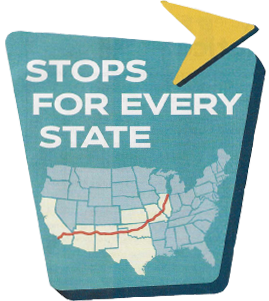
California holds a special place in Route 66 history as the western terminus—the final destination where the highway meets the Pacific Ocean at Santa Monica Pier. For those of us who live, work, and celebrate California car culture, the centennial is more than a historical milestone. It's an opportunity to honor the road that brought millions of travelers to our coast and shaped the automotive culture we know today.
The Birth of Route 66: How America's Highway Came to Be
On November 11, 1926, the U.S. Highway 66 Association officially designated the route that would become the most famous road in America. Stretching 2,448 miles from Chicago, Illinois, to Santa Monica, California, Route 66 connected eight states and dozens of communities that had never been linked by a major highway before.
The road wasn't built overnight. Much of Route 66 followed existing trails, wagon roads, and early automobile routes that had been used for decades. But the official designation meant something profound: for the first time, Americans could drive from the heartland to the coast on a continuous, marked highway. The journey that once took weeks by wagon could now be completed in days by automobile.
What Was So Special About Route 66?
Route 66 arrived at exactly the right moment in American history. The 1920s saw explosive growth in automobile ownership. Henry Ford's assembly line had made cars affordable for middle-class families, and Americans were eager to explore their country. Route 66 gave them the means to do it.
The highway quickly became more than transportation infrastructure. It became economic lifeline for the communities it connected. Towns along Route 66 thrived with gas stations, motels, diners, and roadside attractions competing for travelers' attention and dollars. The road created a distinctly American roadside culture—neon signs, motor courts, drive-in restaurants, and quirky attractions designed to make travelers stop, spend, and remember.
During the Great Depression and Dust Bowl of the 1930s, Route 66 took on even greater significance. Thousands of families fleeing economic devastation in Oklahoma, Texas, and the Midwest used Route 66 to migrate west to California, seeking work and new opportunities. John Steinbeck immortalized this exodus in The Grapes of Wrath, calling Route 66 "the Mother Road" because it carried so many Americans toward hope and survival.
World War II transformed Route 66 again. The highway became a critical corridor for military transport, moving troops and equipment across the country. After the war, returning soldiers who had trained at bases along Route 66 brought their families back to see the Southwest they'd glimpsed during service. Tourism exploded.
The Golden Age: 1950s and 1960s
The postwar years were Route 66's golden age. Americans had money to spend, time to travel, and a love affair with the automobile that defined the era. Route 66 became synonymous with the American road trip. Families piled into station wagons and headed west, stopping at motor courts with vibrant neon signs, eating at diners serving blue-plate specials, and collecting postcards from roadside attractions.
Popular culture embraced Route 66. Bobby Troup's 1946 song "(Get Your Kicks on) Route 66" became a jazz standard, recorded by everyone from Nat King Cole to the Rolling Stones. The lyrics name-checked towns along the route—St. Louis, Joplin, Oklahoma City, Amarillo, Flagstaff, Winona—turning them into household names. In 1960, the television series Route 66 brought the highway into American living rooms every week, following two young men in a Corvette having adventures from coast to coast.
This was the era when Route 66's roadside architecture became iconic: motels shaped like teepees, restaurants with giant spinning signs, gas stations that looked like spacecraft. Communities competed to create the most memorable attractions—the Blue Whale of Catoosa, the Cadillac Ranch in Amarillo, the wigwam motels in California and Arizona. These weren't just businesses; they were experiences designed to make Route 66 unforgettable.
The Decline and Decommissioning
Ironically, Route 66's success planted the seeds of its obsolescence. By the 1950s, the two-lane highway couldn't handle the traffic volume it had created. The Federal Highway Act of 1956 authorized construction of the Interstate Highway System—wide, fast, limited-access freeways designed for efficiency, not experience.
As the new interstates opened, they bypassed the small towns that Route 66 had sustained for decades. Travelers could now drive from Chicago to Los Angeles without stopping in dozens of communities that had depended on highway traffic. Gas stations closed. Motels went dark. Diners served their last meals. Entire towns shriveled as the traffic—and the money—moved to the interstate.
On June 27, 1985, Route 66 was officially decommissioned as a U.S. Highway. The road that had symbolized American mobility and freedom for nearly 60 years was removed from the official highway system. Many people assumed Route 66 would simply disappear, becoming a footnote in transportation history.
The Revival: Why Route 66 Never Really Died
But something unexpected happened. Even as Route 66 vanished from official maps, it grew stronger in the American imagination. The decommissioning sparked a preservation movement. People who had grown up with Route 66, who had family businesses along the route, or who simply loved what the highway represented refused to let it fade away.
Historic Route 66 associations formed in every state along the route. Communities began restoring neon signs, preserving vintage motels, and marking the original roadbed with "Historic Route 66" signs. The National Park Service designated Route 66 a National Scenic Byway. What started as nostalgia became a full-fledged cultural preservation effort.
Today, Route 66 is more popular than ever—not as a practical highway, but as a destination. Travelers from around the world come to experience the Mother Road, driving vintage cars or motorcycles, stopping at restored diners and motor courts, photographing the remnants of mid-century roadside America. Route 66 has become a pilgrimage route for anyone seeking authentic Americana, automotive history, or the freedom of the open road.
Route 66 and California: The Golden State Connection
For California, Route 66 represents more than historical transportation infrastructure. The highway fundamentally shaped Southern California's development and culture. When Route 66 brought travelers to the western terminus at Santa Monica Pier, many decided to stay. The road didn't just connect California to the rest of America—it brought America to California once again.
The California Route 66 Experience
Route 66 enters California from Arizona at Needles, then heads west through the Mojave Desert before climbing into the San Bernardino Mountains. The California segment is only 315 miles—less than 15% of the total route—but it's packed with iconic stops and breathtaking scenery.
The route passes through Barstow, a railroad town that became a Route 66 hub; Victorville, home to the California Route 66 Museum; San Bernardino, where the original McDonald's speedee service system was born; and Pasadena, where the elegant Colorado Street Bridge still carries traffic as it did when Route 66 opened.
The journey ends at Santa Monica Pier, where a "End of the Trail" sign marks the western terminus. Standing on the pier, looking out at the Pacific Ocean, travelers complete a journey that spans the width of the United States. For a century, this has been the symbolic finish line of the American road trip.
California Car Culture and Route 66
California's legendary car culture owes a significant debt to Route 66. The highway brought automotive enthusiasm west, connecting California to Detroit's innovations and the hot rod culture emerging across America. Southern California became the epicenter of custom car culture, with shops along Route 66 building some of the most iconic vehicles in automotive history.
The muscle cars, hot rods, and classic cruisers that define California automotive culture are inseparable from Route 66 heritage. Events like car shows, cruise nights, and vintage rallies often focus on Route 66 themes, celebrating the era when the open road and American automotive design reached their peak together.
That connection between California, cars, and the Mother Road is what inspired our California Dreamin' t-shirt design—and why creating a centennial edition felt not just appropriate, but essential.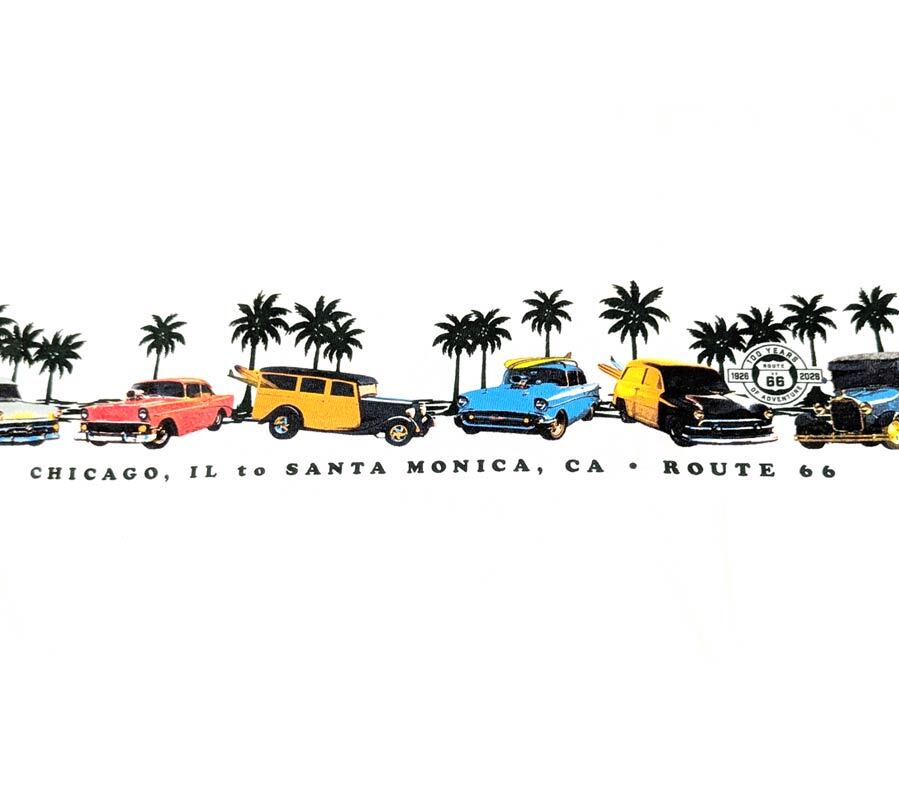
2026 Centennial: Events and Celebrations Across the Route
The Route 66 centennial in 2026 will be the largest celebration in the highway's history. Communities across all eight states are planning festivals, car shows, historical exhibitions, and commemorative events. Here's how you can participate in this once-in-a-century milestone.
AAA Route 66 Centennial Events
The American Automobile Association (AAA), which played a crucial role in promoting Route 66 throughout its history, is organizing official centennial events throughout 2026. These include:
- Multi-state Route 66 rally drives with organized stops at historic landmarks
- Educational programs about Route 66 history and preservation
- Updated Route 66 travel guides and maps commemorating the centennial
- Partnership events with Route 66 museums and preservation groups
For the complete AAA Route 66 centennial event calendar and registration information, visit aaa.com/route66.
California Route 66 Centennial Events
California is hosting numerous centennial celebrations focused on the highway's western segment and terminus. Here are some of the most notable:
Rubel Castle - Glendora, California
This remarkable castle built from river rock and scavenged materials by Michael Rubel stands as one of California's most unusual Route 66 landmarks. The castle is hosting special centennial tours and events throughout 2026, celebrating its connection to the highway's golden age. Rubel Castle represents the eccentric, independent spirit that defined Route 66 culture—one man's obsessive vision creating something unforgettable along the Mother Road.
Colorado Street Bridge - Pasadena, California
Completed in 1913—thirteen years before Route 66 was officially designated—this elegant arched bridge became one of the most photographed structures along the entire route. The bridge carried Route 66 traffic for decades and remains a stunning example of early 20th-century engineering. Centennial events will celebrate both the bridge's architectural significance and its role in Route 66 history.
Chicken Boy - Highland Park, California
This 22-foot-tall fiberglass statue of a boy with a chicken head has become an unlikely Route 66 icon. Originally a restaurant sign, Chicken Boy now stands as a beloved piece of roadside Americana and a symbol of the quirky attractions that made Route 66 memorable. Highland Park is celebrating with Chicken Boy-themed centennial events that embrace the playful, unconventional spirit of Route 66 culture.
Segerstrom Shelby Event Center - Orange County, California
The Segerstrom Shelby Event Center is hosting a major Route 66 history exhibition and automotive celebration in 2026. The event will focus on the connection between Route 66, California car culture, and the legendary Shelby vehicles that represent American automotive performance. This is a must-attend for muscle car enthusiasts and Route 66 historians alike. More information at www.ssecoc.com.
City of Rancho Cucamonga Centennial Celebrations
Rancho Cucamonga, located along the historic Route 66 corridor, is hosting multiple centennial events throughout 2026. The city is organizing vintage car shows, Route 66 heritage walks, historical exhibitions, and community festivals celebrating the highway's impact on the region's development. Details and event schedules at www.ssecoc.com.
Santa Monica Pier - Western Terminus Celebration
As the official western endpoint of Route 66, Santa Monica Pier will host major centennial festivities in 2026. Expect vintage car gatherings, live music, historical presentations, and commemorative events at the iconic "End of the Trail" sign. This is where Route 66 meets the Pacific—the symbolic finish line for a century of American road trips.
Events Across the Full Route
Beyond California, Route 66 communities across all eight states are planning centennial celebrations:
| State | Notable Centennial Events & Stops |
|---|---|
| Illinois | Chicago's Route 66 Begin sign celebrations, self-guided architectural tours, classic car shows at the Pontiac-Oakland Automobile Museum |
| Missouri | Meramec Caverns tours (Show-Me State's largest commercial cave system), vintage motor court stays, Route 66 museum exhibitions |
| Kansas | Galena vintage car shows, celebration of the only 13 miles of Route 66 in Kansas (the shortest segment of any state) |
| Oklahoma | Oklahoma City's First Americans Museum Route 66 exhibition, Tulsa's Buck Atom statue celebrations, restored neon sign tours |
| Texas | Cadillac Ranch gatherings in Amarillo, Slug Bug Ranch vintage Volkswagen displays, Big Texan Steak Ranch centennial specials |
| New Mexico | Tucumcari's Blue Swallow Motel centennial stays, Gallup's El Rancho Hotel historic tours, Native American art markets along the route |
| Arizona | Flagstaff's historic downtown Route 66 celebrations, Winslow's "Standin' on the Corner" Eagles tribute festival, Oatman's famous burros and vintage mining town atmosphere |
| California | Amboy Crater hikes, Roy's Café preservation events, Bagdad Café gatherings, culminating at Santa Monica Pier western terminus |
Route 66 vs. Highway 1: California's Two Legendary Roads
California is blessed with not one but two of America's most famous highways. While Route 66 brought travelers from across the country to the California coast, Highway 1 takes them along that coast for 760 miles of breathtaking Pacific Ocean scenery.
Understanding how these two iconic roads complement each other helps explain California's unique place in American road trip culture.
| Feature | Route 66 | Highway 1 |
|---|---|---|
| Total Length | 2,448 miles (Chicago to Santa Monica) | 760 miles (Dana Point to Leggett) |
| California Segment | 315 miles (Needles to Santa Monica) | Entire route in California |
| Official Designation | 1926-1985 (decommissioned but preserved) | Still active California State Route 1 |
| Terrain | Desert, mountains, urban corridors | Coastal cliffs, beaches, ocean views |
| Cultural Significance | Symbol of American westward migration, Dust Bowl exodus, postwar prosperity, road trip freedom | California coastal lifestyle, surf culture, scenic beauty, relaxed West Coast living |
| Iconic Stops | Santa Monica Pier, Colorado Street Bridge, Roy's Café, Bagdad Café, Amboy Crater | Big Sur, Bixby Bridge, Hearst Castle, 17-Mile Drive, Golden Gate Bridge approach |
| Automotive Culture | Hot rods, muscle cars, vintage cruisers, classic American iron | Convertibles, surf wagons, motorcycles, classic California beach cruising |
| Best For | History buffs, Americana enthusiasts, vintage car lovers, nostalgia seekers | Nature lovers, photographers, coastal explorers, wine country visitors |
The California Connection: Where Route 66 Meets Highway 1
In Santa Monica, Route 66 and Highway 1 intersect. This convergence is more than geographic—it represents the meeting of two distinct American dreams. Route 66 brings the promise of westward opportunity, the romance of cross-country adventure, and the freedom of the open road. Highway 1 offers California coastal beauty, laid-back surf culture, and the Pacific Ocean as ultimate destination.
For car enthusiasts, both roads represent peak American automotive culture. Route 66 celebrates the muscle cars, hot rods, and classic cruisers of mid-century America. Highway 1 showcases California's beach car culture—convertibles with the top down, surf boards strapped to roof racks, coastal cruising as lifestyle.
Together, these highways tell the complete story of California car culture and why the Golden State became synonymous with automotive freedom and style.
 |
 |
 |
Commemorating the Centennial: Limited Edition Collectibles
Major historical milestones deserve commemoration. The Route 66 centennial is a once-in-a-lifetime event—literally. None of us will be here for the 200th anniversary in 2126. That makes 2026 collectibles particularly meaningful for anyone who loves Route 66, California car culture, or American automotive history.
California Dreamin' Route 66 Centennial Edition
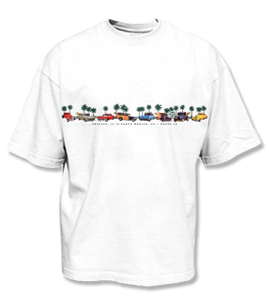
We created our California Dreamin' design years ago to celebrate California car culture—vintage vehicles, palm trees, and that indefinable California vibe that made the West Coast the promised land for generations of travelers. The design captured something essential about California's relationship with the automobile and the open road.
For the Route 66 centennial, we've added something special: an official "100 YEARS ROUTE 66 1926-2026" commemorative badge integrated into the classic design. This isn't just a t-shirt—it's a wearable piece of automotive history, a collectible marking the 100th anniversary of America's most famous highway.
Why This Design Works for the Centennial:
- Vintage Aesthetic: The design captures the golden age of Route 66 travel—classic cars, palm trees, the promise of California at the end of the road
- California Connection: Santa Monica was Route 66's western terminus, making California designs especially significant for centennial commemorations
- Limited Production: Like all centennial collectibles, this is a limited 2026 release—once inventory is gone, it's gone
- Quality Construction: Built on our 7.5 oz heavyweight garment-dyed platform, made in Southern California—this shirt will last as long as Route 66 memories
- Authentic Provenance: Manufactured in California by a family-owned company with roots in Southern California car culture
For Route 66 enthusiasts, car show regulars, vintage automobile collectors, or anyone planning to attend centennial events, the California Dreamin' centennial edition serves as both conversation starter and commemoration. It's the shirt you wear to cruise nights, Route 66 rallies, and automotive events throughout 2026 and beyond.
Shop the California Dreamin' Route 66 Centennial Edition: California Dreamin' Classic Fit
Highway 1: The California Companion Piece
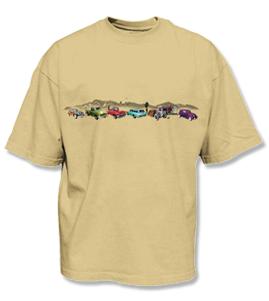
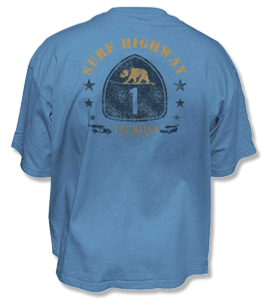
For those celebrating both of California's legendary highways, our Highway 1 design offers the perfect complement to the Route 66 centennial edition. Featuring the iconic California Highway 1 shield and "760 MILES" designation, this design celebrates California's other famous road—the coastal route that shows off the Golden State's spectacular Pacific shoreline.
While Route 66 brought travelers to California, Highway 1 shows them why they wanted to stay. The design captures that California coastal lifestyle: surf culture, beach towns, cliff-side drives, and endless ocean views.
Why Pair Highway 1 with Route 66:
- Both highways are automotive cultural icons
- Route 66 and Highway 1 intersect in Santa Monica
- Together they represent California's complete car culture story
- Collectors can commemorate both legendary roads
- Perfect for anyone planning a dual-route California road trip
The Highway 1 design is from our earlier production runs and inventory is limited. For centennial collectors building a California automotive heritage collection, pairing Highway 1 with the Route 66 centennial edition creates a complete set representing California's two most famous roads.
Shop Highway 1: Highway 1 Classic Fit
Why Heavyweight Quality Matters for Collectibles
Commemorative t-shirts should last longer than the event they commemorate. Too many centennial collectibles are printed on cheap, lightweight fabric that fades, shrinks, and falls apart within a year or two. That's not a collectible—that's disposable merchandise.
Our Route 66 centennial shirts are built on the same heavyweight platform that's made our blank tees (no print) legendary:
- 7.5 oz super heavyweight cotton (nearly double the weight of standard retail tees)
- Garment-dyed in California (pre-shrunk, soft from day one but gets better with age, rich dimensional color)
- Made in Southern California, USA (supporting California manufacturing, just like Route 66 supported American manufacturing)
- Built to last 7-10 years (this shirt could still be wearable for the 110th anniversary in 2036)
- Ages beautifully (develops vintage patina over time, just like Route 66 itself)
For more on why heavyweight construction matters: What Weight is Heavyweight T-Shirt?
When you're commemorating a once-in-a-century milestone, the quality of the commemoration matters. These aren't throwaway event shirts. They're built to be part of your wardrobe for years, worn to future Route 66 events, car shows, and cruise nights long after the centennial year ends.
Planning Your Route 66 Centennial Experience
If you're considering a Route 66 trip for the centennial, here's how to make the most of the experience.
Full Route vs. California Segment
The Complete Route (2-3 weeks):
Driving the full 2,448 miles from Chicago to Santa Monica takes 2-3 weeks if you're doing it right—stopping at historic sites, eating at vintage diners, photographing roadside attractions, and soaking up the full Route 66 experience. This is the ultimate American road trip and the centennial year is the perfect time to do it.
The California Segment (3-5 days):
If time is limited, the 315-mile California segment offers a concentrated Route 66 experience. Starting in Needles at the Arizona border, you can drive through the Mojave Desert, climb into the San Bernardino Mountains, pass through historic California communities, and finish at Santa Monica Pier in 3-5 days with proper stops along the way.
What to Bring
- Physical maps: GPS is convenient, but Route 66 navigation requires more nuance since much of the original route is now frontage roads or disconnected segments
- Camera: Route 66 is endlessly photogenic—vintage signs, classic motels, roadside attractions, desert landscapes
- Cash: Many Route 66 businesses are small, independent operations that may not accept credit cards
- Patience: Route 66 is about the journey, not the destination—embrace slow travel and unexpected detours
- Your centennial shirt: You'll want to be wearing it in photos at the Santa Monica Pier terminus
Best Time to Travel Route 66
While Route 66 can be driven year-round, certain seasons offer better experiences:
Spring (April-May): Ideal weather across most of the route, wildflowers in desert segments, comfortable temperatures
Fall (September-October): Excellent weather, smaller crowds than summer, beautiful light for photography
Summer (June-August): Peak season with most events and activities, but expect extreme heat in desert segments and crowds at popular stops
Winter (November-March): Fewer crowds and lower prices, but cold weather in northern states and potential snow in mountain segments
For the centennial year 2026, expect higher-than-usual traffic and crowds, especially during major events. Book accommodations well in advance, particularly at historic motor courts and vintage motels.
The Route 66 Legacy: Why It Still Matters
A century after its designation, why does Route 66 still capture our imagination? The highway has been decommissioned for nearly 40 years. The interstates are faster, smoother, and more efficient. So why do people from around the world come to drive a road that officially doesn't exist anymore?
Route 66 as Symbol
Route 66 represents something deeper than efficient transportation. It symbolizes:
Freedom: The open road, the ability to go anywhere, the promise that adventure waits around the next curve
Opportunity: The westward journey in search of better lives, the Dust Bowl refugees seeking California's promise, the postwar prosperity that made road trips possible
Community: The small towns that thrived because of the highway, the family-owned businesses that served travelers for generations, the roadside culture built on genuine hospitality
Authenticity: Real America, not the homogenized chain-store landscape of modern interstates, but the quirky, independent, human-scale businesses that made every town unique
Nostalgia: A simpler time when travel was an adventure, when neon signs beckoned travelers to stop and stay awhile, when the journey mattered as much as the destination
Route 66 in Contemporary Culture
Route 66 continues to inspire contemporary culture. The highway appears in films, songs, novels, and television shows. International tourists—especially from Europe and Japan—travel specifically to experience Route 66, often understanding its significance better than many Americans.
Car enthusiasts treat Route 66 as a pilgrimage route. Vintage automobile clubs organize Route 66 rallies. Motorcycle groups ride the Mother Road on Harleys. Hot rod owners cruise the route in classic American iron. Route 66 has become inseparable from American automotive culture.
The highway also represents successful grassroots preservation. When Route 66 was decommissioned, it could have simply disappeared. Instead, people who cared about the road's history and significance organized to save it. Today, Route 66 preservation groups maintain historic sites, restore vintage signs, and keep the highway's story alive for future generations.
Route 66 and California Manufacturing: Shared Values
There's a connection between Route 66's legacy and what we do at Heavyweight Collections. Both represent something increasingly rare: American-made quality built to last, created by people who care about the outcome.
Route 66 succeeded because communities along the route took pride in what they offered travelers. Motor court owners maintained their properties. Diner owners served quality food. Gas station operators provided honest service. The highway thrived on authentic hospitality and genuine quality—values that feel endangered in today's disposable, outsourced economy.
We manufacture heavyweight t-shirts in southern California, using the same philosophy that made Route 66 businesses successful: build quality into the product, stand behind what you make, create something that lasts. Our centennial shirts are made in California by California workers, celebrating a highway that brought millions of people to California seeking the American dream.
That feels right. Route 66 connected America. California manufacturing keeps quality production alive in America. The centennial is an opportunity to celebrate both.
Learn more about our California manufacturing: Premium USA Made T-Shirts for Men: Why Manufacturing Location Matters
Frequently Asked Questions: Route 66 Centennial 2026
When is the Route 66 centennial?
The official Route 66 centennial date is November 11, 2026, marking 100 years since US Highway 66 was officially designated in 1926. However, centennial celebrations and events will take place throughout 2026 across all eight states along the route (Illinois, Missouri, Kansas, Oklahoma, Texas, New Mexico, Arizona, and California). Major events are planned from spring through fall 2026 to accommodate travelers during ideal driving seasons.
How long is Route 66 and where does it start and end?
Route 66 is 2,448 miles long, running from Chicago, Illinois, to Santa Monica, California. The eastern terminus is at Jackson Boulevard and Michigan Avenue in Chicago. The western terminus is at the Santa Monica Pier in California, where an "End of the Trail" sign marks the official endpoint. The route crosses eight states and takes approximately 2-3 weeks to drive properly with stops at historic sites and attractions.
What are the best Route 66 stops in California?
Notable California Route 66 stops include: Santa Monica Pier (western terminus with End of the Trail sign), Colorado Street Bridge in Pasadena (elegant 1913 arched bridge), Rubel Castle in Glendora (eccentric roadside attraction), Chicken Boy in Highland Park (22-foot fiberglass statue), Roy's Café in Amboy (iconic desert gas station and diner), Bagdad Café in Newberry Springs (famous from the 1987 film), and Amboy Crater (volcanic cinder cone). The California segment also passes through Needles, Barstow, Victorville, San Bernardino, and Rancho Cucamonga.
Is Route 66 still drivable in 2026?
Yes, approximately 85% of Route 66 is still drivable, though the route was officially decommissioned in 1985. Some segments are now Interstate frontage roads, state highways, or county roads, while other sections have been bypassed or abandoned. Historic Route 66 is well-marked with brown "Historic Route 66" signs in most locations. Detailed maps and GPS apps specifically for Route 66 help navigate the remaining drivable portions. The centennial year is an ideal time to drive the route as preservation efforts have restored many historic segments.
What events are happening for the Route 66 centennial in California?
Major California centennial events include celebrations at Rubel Castle in Glendora, Colorado Street Bridge heritage events in Pasadena, Chicken Boy festivities in Highland Park, the Segerstrom Shelby Event Center automotive exhibition, multiple events organized by the City of Rancho Cucamonga, and a major celebration at Santa Monica Pier's western terminus. AAA is coordinating official centennial events accessible at aaa.com/route66. Local Route 66 preservation groups are organizing car shows, vintage rallies, and historic tours throughout 2026.
Why was Route 66 called the Mother Road?
John Steinbeck coined the term "Mother Road" in his 1939 novel The Grapes of Wrath. He used it to describe Route 66's role in carrying thousands of Dust Bowl refugees from Oklahoma, Texas, and the Midwest to California during the Great Depression. The highway became a lifeline for families fleeing economic devastation, offering a path to potential work and new opportunities in California. The name stuck because Route 66 nurtured and sustained the communities along its route, much like a mother nurtures her children. It became the road of migration, hope, and survival.
Where can I buy Route 66 centennial merchandise?
Official Route 66 centennial merchandise is available from Route 66 museums, preservation associations, and select retailers specializing in Route 66 memorabilia. Quality commemorative apparel like the California Dreamin' Route 66 Centennial Edition t-shirt is available at heavytshirt.com/california-dreamin-heavy-t-shirts-classic-fit. AAA also offers centennial maps, guides, and collectibles through aaa.com/route66. When purchasing centennial collectibles, look for quality construction and authentic designs that will last beyond 2026—this is a once-in-a-century milestone worth commemorating with items built to endure.
What's the connection between Route 66 and car culture?
Route 66 and American car culture grew up together. The highway was designated in 1926, just as automobile ownership was becoming accessible to middle-class Americans. Route 66 gave people a destination—a cross-country adventure from Chicago to California. The highway created the American road trip concept and the automotive tourism industry. During Route 66's golden age in the 1950s-60s, the route became synonymous with classic cars, hot rods, and the freedom of the open road. Today, vintage car rallies, motorcycle clubs, and classic automobile enthusiasts treat Route 66 as a pilgrimage route celebrating automotive heritage.
How does Highway 1 relate to Route 66?
California Highway 1 and Route 66 intersect in Santa Monica, where Route 66 ends at the Pacific Ocean. While Route 66 brought travelers across America to California, Highway 1 takes them along California's spectacular 760-mile coastline from Dana Point to Leggett. Together, these two iconic highways represent California's unique position in American road trip culture—Route 66 as the promise of westward opportunity, Highway 1 as the fulfillment of that promise with coastal beauty and California lifestyle. Both highways celebrate automotive freedom and remain popular with car enthusiasts and road trip travelers.
Will there be a Route 66 centennial in 2085 for the decommissioning?
While Route 66 was officially decommissioned on June 27, 1985, it's unlikely the decommissioning will be celebrated the same way as the original 1926 designation. The decommissioning marked the end of Route 66 as an official US Highway, but preservation efforts have kept the highway alive culturally and economically. The 2026 centennial celebrates Route 66's beginning and its enduring legacy, not its bureaucratic end. By 2085, Route 66 will have existed longer as a preserved historic route than it did as an active highway, cementing its status as a cultural icon rather than functional infrastructure.
The Road Ahead: Route 66's Next Century
What does the future hold for Route 66? The highway that was supposed to disappear after decommissioning has instead grown stronger in cultural significance with each passing decade. Preservation efforts continue to restore historic sites, save vintage signs, and maintain drivable segments of the original route.
Younger generations are discovering Route 66 through social media, road trip documentaries, and a renewed appreciation for authentic, human-scale travel experiences. The highway offers an antidote to the homogenized, algorithm-driven, screen-mediated modern world. Route 66 is real, physical, and tangible—you have to actually go there to experience it.
The centennial will introduce Route 66 to millions of people who might not otherwise have discovered it. Some will fall in love with the road and become preservation advocates. Some will bring their children back to show them the America their grandparents knew. Some will simply enjoy a unique road trip and move on. All of it matters. All of it keeps the Mother Road alive for another generation.
Route 66 has survived the Interstate Highway System, economic decline, corporate homogenization, and official decommissioning. It's survived because people decided it was worth saving. The centennial celebrates not just 100 years of highway history, but 100 years of the values Route 66 represents: freedom, opportunity, community, and the enduring American love affair with the open road.
Final Thoughts: Get Your Kicks in 2026
The Route 66 centennial is a once-in-a-lifetime event. None of us will be here for the 200th anniversary. That makes 2026 special—a rare opportunity to celebrate a highway that changed America and still captures the imagination a century after its designation.
Whether you drive the full 2,448 miles from Chicago to Santa Monica, explore just the California segment, or simply attend local centennial events, 2026 is the year to experience Route 66. Wear the commemorative shirt. Take the photos. Stop at the vintage diners and motor courts. Talk to the preservation volunteers who keep the highway alive. Understand what Route 66 meant to the people who built it, drove it, and loved it.
Route 66 represents the best of America: optimism, mobility, independence, hospitality, and the belief that the road ahead holds promise. One hundred years later, the Mother Road still inspires us to hit the highway, see what's around the next curve, and get our kicks on Route 66.
Ready to commemorate the centennial? Shop the California Dreamin' Route 66 Centennial Edition and the Highway 1 Classic Fit. More centennial designs to follow . . . and find official events at aaa.com/route66.
About the Author
Jay Durkee is the founder of Heavyweight Collections, a family-owned apparel manufacturer based in San Clemente, California. As a garment maker and lifelong car enthusiast, Jay has spent over 40 years in the apparel industry with a particular passion for celebrating California automotive culture and American manufacturing heritage.
Related Articles: